

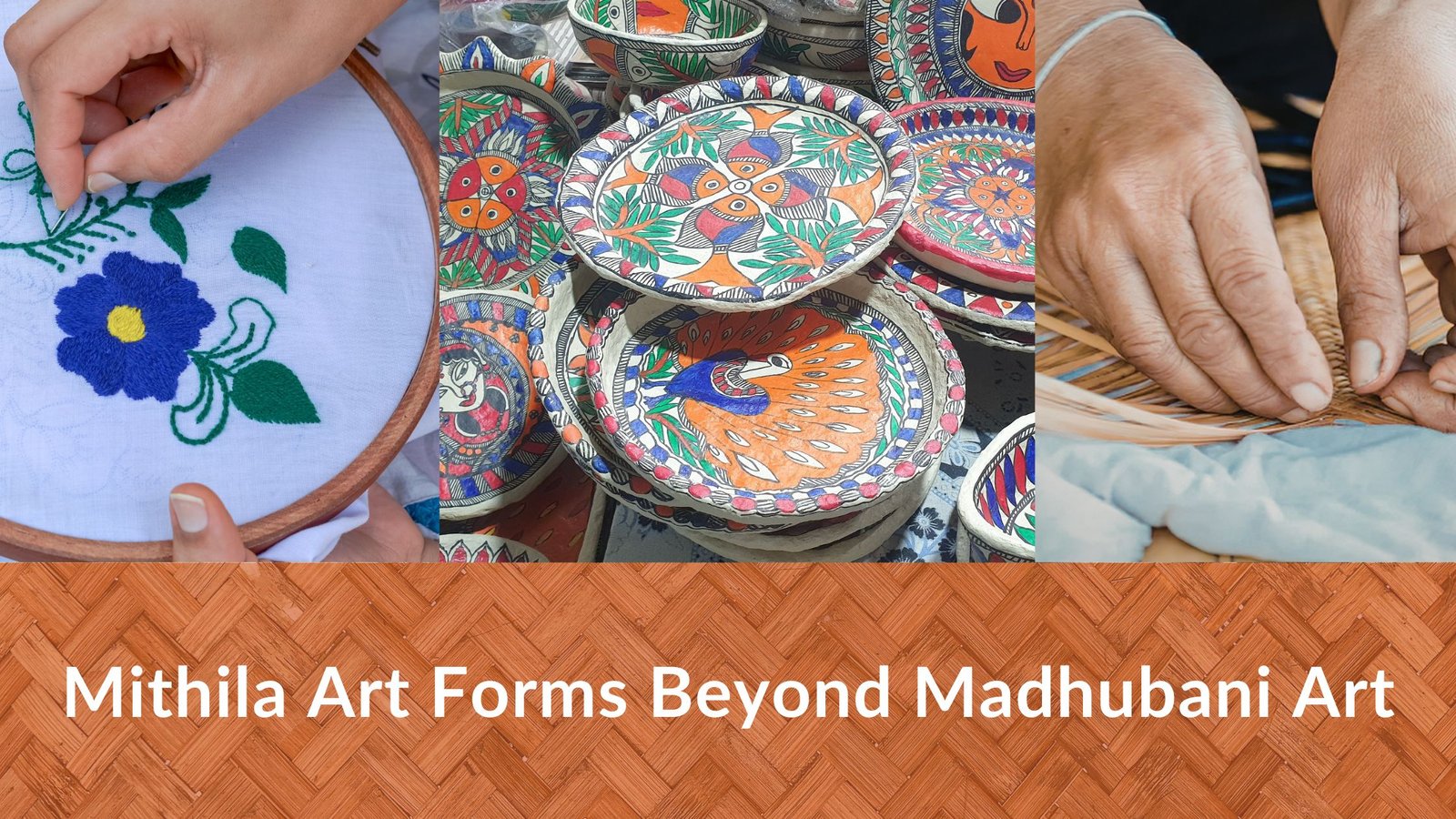
Most people who know Mithila know it for one thing: Madhubani painting. Those bold lines, vibrant colors, and intricate patterns have made it one of India’s most recognized folk art traditions. But Madhubani painting is just the tip of the iceberg.
Mithila’s artistic soul runs much deeper. For centuries, its people, mostly women, have been creating, weaving, stitching, and molding art into everyday life. Not for galleries or exhibitions, but for rituals, celebrations, and the simple act of making their homes and lives more beautiful.
Let’s take a closer look at five Mithila art forms that deserve far more attention than they get.
Aripan Art – When the Floor Becomes a Canvas
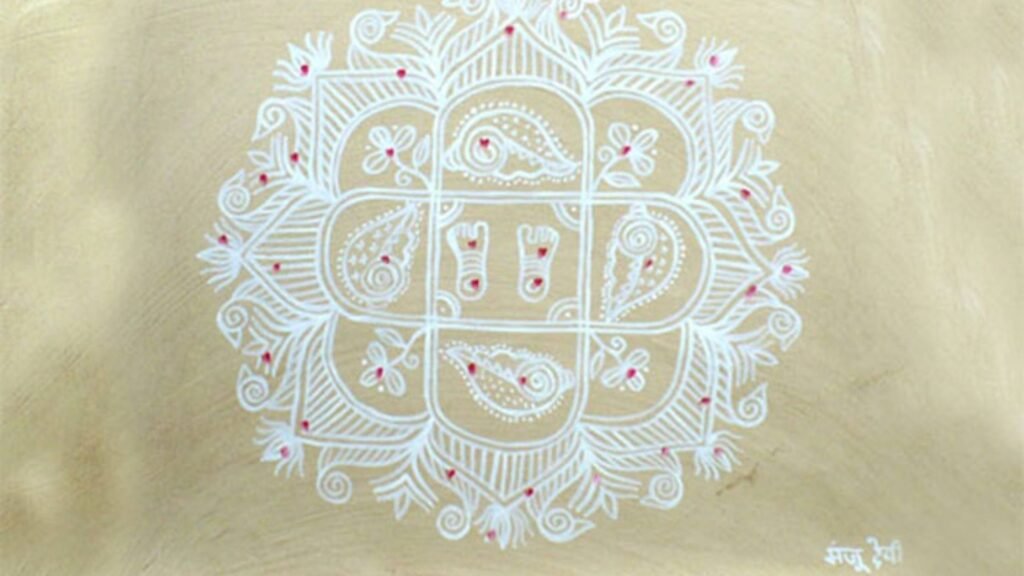
If you’ve ever attended a puja or wedding in a Maithil household, you’ve almost certainly seen Aripan, even if you didn’t know it by name. It’s that beautiful white pattern drawn on the floor near the entrance or the ritual space, made from something as simple as rice flour paste.
Aripan is traditionally made by women and passed down from mothers to daughters over generations. The designs aren’t random. Every motif has meaning. Geometric patterns, lotus flowers, fish, and religious symbols are all woven together to invite prosperity, protect the home, and mark an occasion as sacred.
What makes Aripan particularly special is its impermanence. It’s created for a moment, a ceremony, a celebration, and then it’s cleared. There’s something quietly beautiful about an art form that isn’t made to last forever, but to make the present moment feel meaningful.
Paper Mache Crafts – Giving Old Paper a New Life
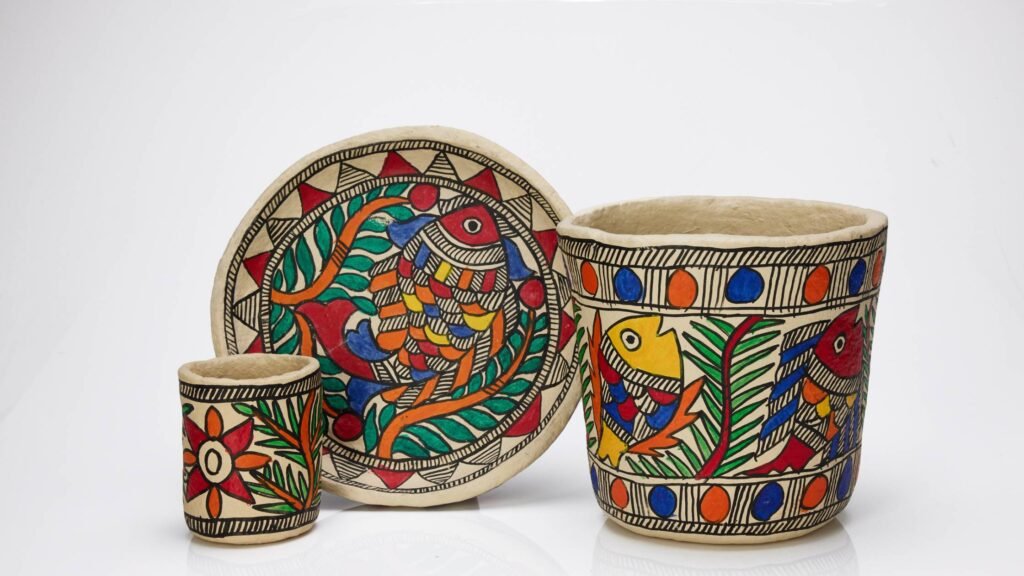
Paper mache might sound like a school art project, but in Mithila, it’s a legitimate craft tradition with real artistry behind it.
Here, artisans make paper mache clay using recycled paper mixed with a natural adhesive, typically flour paste or flaxseed gel. This clay is then hand-molded into decorative objects like vases, masks, holders, and wall hangings. Once shaped and dried, these pieces are painted with traditional Madhubani motifs in rich, vivid colors.
The result? Objects that are both beautiful and sustainable. Nothing is wasted. Old newspapers and discarded paper get a second life as intricate works of art that find their way into homes as decor pieces.
It’s a wonderful reminder that art doesn’t need expensive materials. Just skill, patience, and imagination.
Sujani Embroidery – Stitching Stories Into Fabric
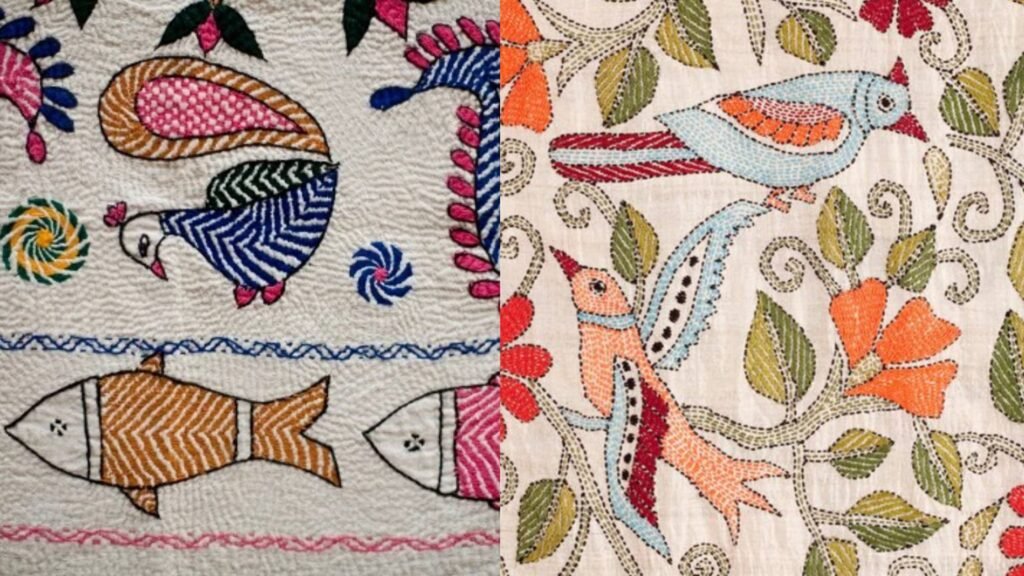
Sujani embroidery is one of those art forms that stops you in your tracks the first time you truly look at it. Layer upon layer of colorful thread, stitched with extraordinary precision onto fabric, telling stories that words sometimes can’t.
Traditionally, Sujani quilts were made by layering old saris and dhotis, fabrics that had worn out from everyday use, and stitching them together with detailed embroidery. The themes ranged from mythological tales and folk stories to scenes from village life: women carrying water, farmers tending fields, festivals in full swing.
This craft has earned a Geographical Indication (GI) tag for Bihar, recognizing it as a culturally significant tradition rooted in the region. Today, Sujani embroidery has moved beyond quilts and appears on wall hangings, cushion covers, bedspreads, and more, finding new audiences while staying true to its origins.
What stands out most about Sujani is how it transforms discarded cloth into something precious. It’s sustainable and expressive, carrying the stories of the women who created it.
Sikki Crafts – Weaving Gold From Grass
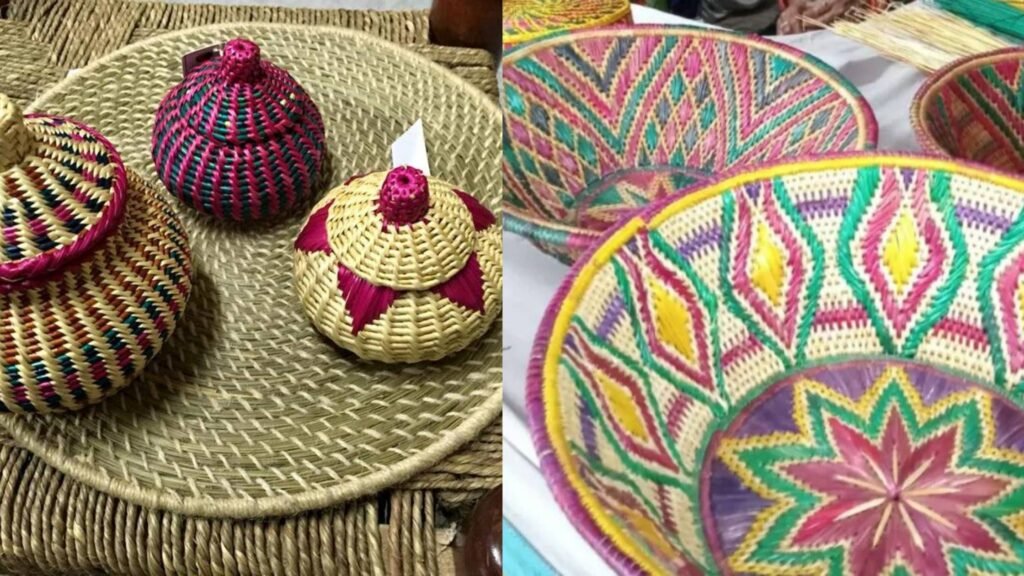
At first glance, Sikki grass might not look like much. It’s a wild, golden-tinted grass that grows in the Tarai regions of Bihar and Uttar Pradesh. But in the hands of a skilled Mithila artisan, it becomes something extraordinary.
Sikki art involves weaving this grass into intricate baskets, trays, toys, and figurines. The craft relies entirely on the natural color and texture of the grass, no dyes or artificial finishes. Just the golden shimmer of the grass itself, shaped through hours of patient, precise weaving.
Beyond its beauty, Sikki grass holds cultural importance in Mithila. It’s considered auspicious, and Sikki items are often used in ceremonies and given as gifts at special occasions. The craft has also gained recognition far beyond the region, with Sikki products finding admirers in national and international markets.
In a world increasingly drawn to handmade, natural, and eco-conscious products, Sikki art feels remarkably ahead of its time, even though it’s centuries old.
Bamboo Crafts – Where Utility Meets Tradition
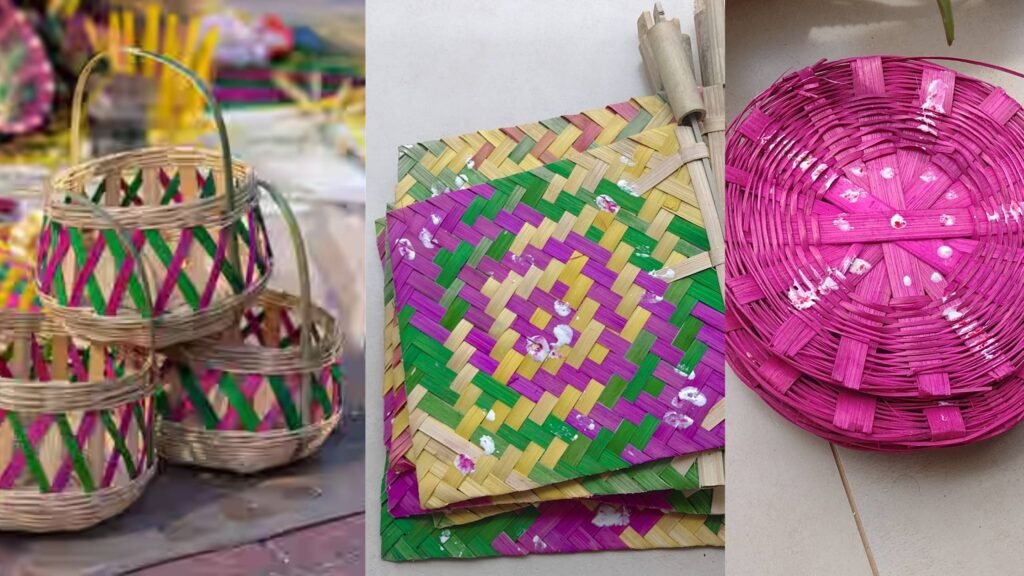
Bamboo has been a part of Maithil life for as long as anyone can remember. It grows abundantly in the region, and its uses are woven into both daily routines and sacred rituals.
During Chhath Puja, one of the most important festivals in Bihar, bamboo items are indispensable. At weddings, bamboo objects play ceremonial roles. In farming households, large bamboo containers store grain. In kitchens, woven bamboo soops are used to clean and sort rice and other grains.
Artisans who work with bamboo develop extraordinary skill over years of practice, splitting, bending, and weaving the material into items that are both functional and refined. And today, bamboo craft has evolved to include furniture, home decor, and lifestyle products, blending traditional technique with contemporary design.
What makes bamboo crafts particularly relevant today is their sustainability. Bamboo is one of the fastest-growing plants on earth, making it one of the most renewable materials available. Using it isn’t just a cultural choice, it’s an environmentally responsible one.
These Art Forms Deserve More Than Our Admiration
It’s easy to appreciate these crafts from a distance. But the real challenge, and the real opportunity, is to bring them into our lives more actively.
When you buy a Sikki basket instead of a plastic one, hang a sujani piece on your wall, or choose a paper mache vase for your shelf, you’re not just decorating your home. You’re supporting an artisan, sustaining a tradition, and keeping a piece of living culture alive.
Mithila’s art forms have survived for centuries not because they were locked away in museums, but because they were used, gifted, worn, and displayed in everyday life. That’s how they’ll continue to survive… through us.
So the next time someone mentions Mithila, tell them about more than just Madhubani paintings. There’s a whole world of art waiting to be discovered.
Frequently Asked Questions About Mithila Art Forms
Q1. What are the major art forms of Mithila besides Madhubani painting?
Besides Madhubani painting, Mithila is home to several lesser-known but equally rich art forms, including Aripan art, Sujani embroidery, Sikki crafts, paper mache crafts, and bamboo crafts. Each reflects the region’s deep connection with nature and cultural traditions.
Q2. What is Aripan art, and when is it practiced?
Aripan art involves creating intricate patterns using rice flour paste on the floors and walls of homes. It is traditionally practiced by women during religious rituals, festivals, and ceremonies like weddings, featuring geometric, floral, and religious motifs symbolizing prosperity and auspiciousness.
Q3. What makes Sujani embroidery special?
Sujani embroidery is a textile art from Bihar where women stitch vibrant, detailed patterns on fabric to depict folklore, mythology, and everyday life. It holds a Geographical Indication (GI) tag and was traditionally made by repurposing old saris and dhotis, making it both culturally significant and sustainable.
Q4. What is Sikki art, and where does it originate?
Sikki art is a craft made from golden-tinted Sikki grass native to the Tarai regions of Bihar and Uttar Pradesh. Artisans weave this grass into baskets, trays, and figurines using its natural color and intricate techniques. It is considered auspicious and has gained recognition on a global stage.
Q5. How is bamboo used in Mithila’s cultural traditions?
Bamboo plays a central role in various Maithil rituals, including Chhath Puja and wedding ceremonies. Artisans weave bamboo bark into everyday items like grain cleaners, hand fans, and storage containers. Today, bamboo crafts have expanded to include furniture, blending tradition with sustainability.
Q6. Are Mithila art forms eco-friendly?
Yes, most Mithila art forms are deeply rooted in sustainable practices. Aripan uses natural rice flour, Sujani repurposes old fabrics, paper mache uses recycled paper, Sikki art uses natural grass, and bamboo crafts utilize a renewable resource, all reflecting the region’s traditional commitment to eco-friendly living.

1 comment
Kitne saral ,sabdo mai mithilamelange
Ne in bato ko logo tk pahuchne ka prayash kiya h wakey kabile tarif h …….